

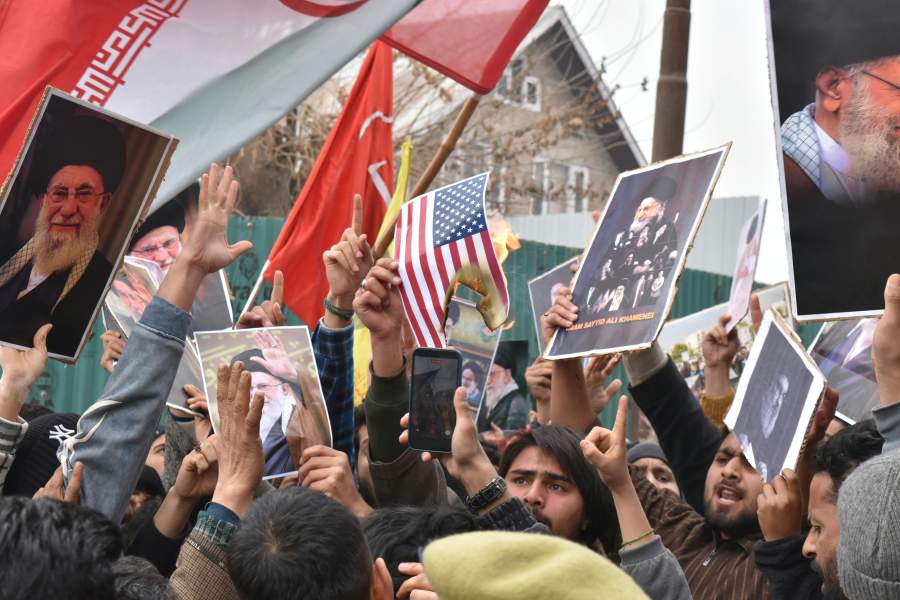
The current US Iran relations war status stands at a critical juncture in early 2026, shaped by military build‑ups, nuclear negotiations, and deep diplomatic mistrust. After years of hostility, both nations have oscillated between threats of force and attempts at negotiation. The U.S. has deployed major military assets to the Middle East, including multiple aircraft carrier strike groups, as Iran continues to expand its nuclear enrichment program and respond aggressively to sanctions and public unrest. Tensions have been compounded by Iran’s domestic protests and severe economic crisis, even as indirect negotiations in Geneva seek to prevent outright war. In this article, we break down the latest developments, regional implications, and what the future may hold for U.S.–Iran relations.
Historical Background — How U.S.–Iran Tensions Reached Today
The roots of the current US Iran relations war status stretch back decades, shaped by major events that have built mutual distrust and rivalry.
The modern U.S.–Iran relationship began to fracture after the 1979 Iranian Revolution, which overthrew the American‑backed Shah and led to the U.S. Embassy hostage crisis. Years of proxy conflicts followed, with the U.S. supporting regional allies opposed to Iran’s influence. The 2015 nuclear agreement, known as the Joint Comprehensive Plan of Action (JCPOA), offered hope for détente but collapsed in 2018 when the U.S. withdrew and reinstated sanctions. Tensions escalated into military confrontations, with proxy clashes in Iraq and Yemen and direct air strikes in 2025 against Iranian nuclear sites.
The result has been a long series of hostile episodes that have culminated in the current US Iran relations war status, defined by brinkmanship, shows of force, and intermittent diplomacy.
Military Dynamics — Deployment and Risk of Direct Conflict
U.S. Military Build‑Up in the Middle East
In January 2026, the United States significantly increased its military footprint in the Middle East. A carrier strike group led by the USS Abraham Lincoln was sent nearer to Iranian waters, followed by the USS Gerald R. Ford — one of the most advanced warships in the U.S. fleet — reinforcing the show of strength. This buildup is part of a broader strategy to deter escalation and prepare for contingency operations if diplomacy fails.
Iran’s Response and Regional Posture
Iran has responded to these moves with its own signaling of readiness for war. Tehran has said it remains prepared to defend itself against U.S. intervention and has warned that any attack could trigger a wider regional war, invoking concerns for instability across the Middle East.
Proxy Warfare and Regional Tensions
The current US Iran relations war status is also reflected in ongoing proxy engagements in Iraq, Syria, and Yemen. Iran‑aligned militias have clashed with U.S. forces and partners, while Washington continues to support regional allies that oppose Tehran’s influence.
Essential Drivers Behind Today’s High Tensions
The current US Iran relations war status has several interlinked causes that make the situation volatile:
- Iran’s nuclear program and uranium enrichment levels near weapons‑usable grades raise global alarm.
- Economic sanctions imposed by the U.S. have crippled Iran’s economy, deepening domestic unrest.
- Recent protests in Iran over economic conditions and government crackdowns have intensified political instability.
- Diplomatic negotiations have resumed but remain fraught, with demands from both sides that are difficult to reconcile.
- Regional allies like Israel exert pressure on the U.S. to maintain a hard line against Iran.
Diplomatic Efforts — Nuclear Talks and Negotiation Hurdles
Negotiations between the U.S. and Iran in 2025–2026 are part of efforts to determine the current state of U.S.- Iran relations without military escalation. After initial talks in Oman, a second round of indirect discussions is underway in Geneva, aimed at curbing Iran’s nuclear capabilities while lifting some sanctions in return.
Iran has signaled willingness to compromise on its nuclear program if sanctions are eased, emphasizing that the ball is “in America’s court.” In contrast, the U.S. continues to press for limitations on Iran’s enrichment, ballistic missile development, and support for proxy groups.
These negotiations are central to the assessment of whether the current US Iran relations war status will shift toward de‑escalation or drift closer to conflict.
Economic and Humanitarian Impacts of U.S.–Iran Tensions
The prolonged hostility between the U.S. and Iran has had serious effects beyond military strategy. Iran is experiencing one of its worst economic crises in decades, with a plummeting currency, soaring inflation, and widespread unemployment. This crisis has fed massive protests across the country, exacerbating social unrest and putting pressure on Tehran’s leadership.
The U.S. approach — involving sanctions and heightened military pressure — contributes to this economic strain. Both domestic deprivation and international conflict risks have displaced families, derailed investment, and amplified public resentment, factors that feed back into the current US Iran relations war status.
Regional and Global Reactions to U.S.–Iran Strain
The current US Iran relations war status reverberates far beyond bilateral relations. Regional actors like Saudi Arabia, the UAE, and Iraq navigate complex alliances. Meanwhile, European nations push for revived diplomacy rather than conflict. China — Iran’s largest trading partner — has criticized coercive pressure, suggesting that it may undermine efforts at peaceful resolution.
Global public opinion and international organizations remain concerned, given the potential for escalation to disrupt oil markets, increase refugee flows, and trigger broader conflict.
Conclusion
The current US Iran relations war status remains tense, balancing precariously between diplomatic engagement and military escalation. Talks in Geneva offer a pathway to possible de‑escalation, but sticking points such as sanctions relief and nuclear limitations complicate an agreement. The high military presence in the Middle East, coupled with domestic instability within Iran, raises the risk of miscalculation or unintended confrontation. Regional players and global stakeholders are closely watching, aware that shifts in this status can have significant geopolitical ripple effects. Continued diplomacy, mutual concessions, and confidence‑building measures will be critical to navigating toward a more stable future.
FAQ’s
Why are U.S.–Iran tensions so high?
The current US Iran relations war status is high due to disagreements over Iran’s nuclear program, economic sanctions, proxy conflicts in the Middle East, and shifting diplomatic strategies.
Are the U.S. and Iran actually at war?
As of early 2026, there is no declared full‑scale war between the U.S. and Iran, but military buildups and proxy conflicts reflect a fragile and escalatory situation.
What role do sanctions play in this conflict?
Sanctions imposed by the U.S. have crippled Iran’s economy and are used as leverage in diplomatic negotiations, but they also contribute to domestic hardship and heightened tensions.
Is diplomatic negotiation still possible?
Yes — indirect nuclear talks in Geneva aim to find common ground, but both sides maintain hardline positions that complicate negotiations.
How could the situation improve?
A combination of diplomatic compromise, phased sanctions relief, and mutual concessions on nuclear limits could reduce the current state of war between the US and Iran and lessen the risk of military conflict.
